
In today’s highly competitive cultural and tourism market, a successful amusement project must not only be “playable” but also “visually appealing, profitable, and space-efficient.” Among the many powered amusement rides, the double-decker carousel may seem classic and traditional, but it actually holds hidden investment potential—it is no longer the simple decorative piece from childhood memories but an “all-round performer” that combines visual appeal, stable revenue-generating capability, and efficient space utilization.
Today, we will delve into the three dimensions investors care about most—aesthetics, revenue, and space efficiency—to analyze why the double-decker carousel deserves a spot on your next equipment procurement list.
1. Aesthetics Drive Traffic: High Recognition Creates a “Check-in Landmark”
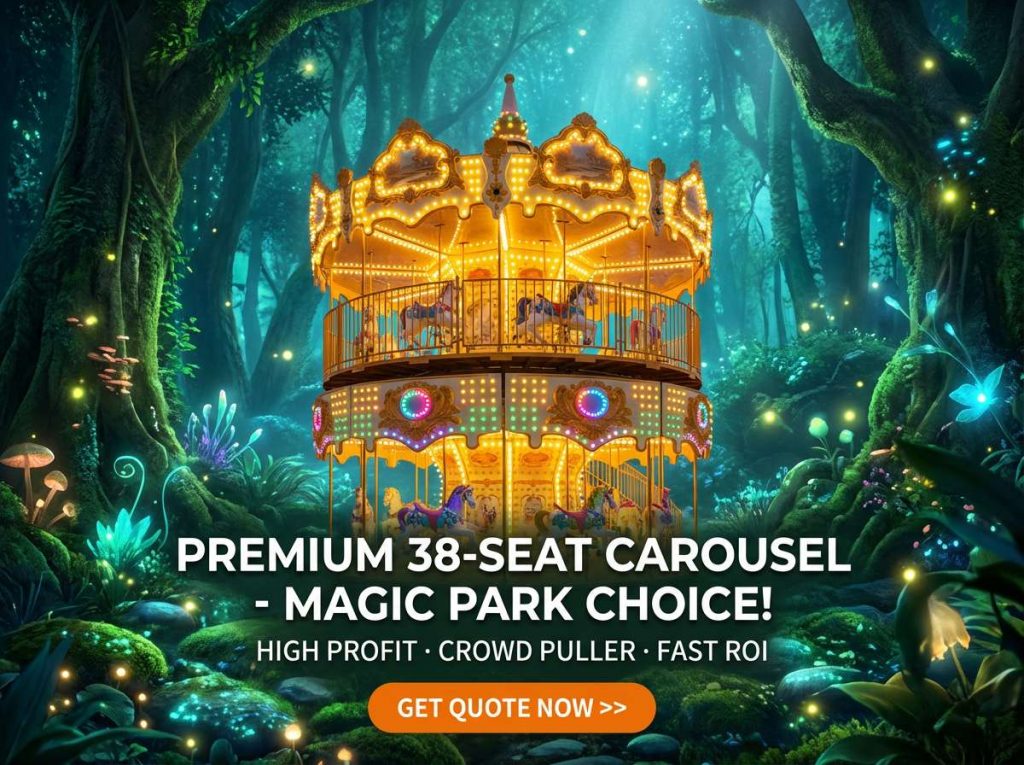
In an era dominated by social media, the “aesthetic economy” has become deeply embedded in the underlying logic of cultural and tourism consumption. With its grand scale, exquisite design, and dazzling lighting system, the double-decker carousel naturally possesses the genes to become the “visual focal point” of a park.
• Two-Tier Structure Adds Grandeur: Compared to single-tier equipment, the double-decker design offers greater visual layering and a sense of ceremony. Especially at night, paired with customized light shows, it can easily become a crowd-pulling tool for nighttime park economies.
• Customizable Thematic Packaging: Whether it’s European palace style, dreamy fairy-tale themes, or collaborations with trendy domestic IPs, the double-decker carousel can be customized in appearance to align with the overall style of the scenic area, achieving a seamless fusion of “equipment as scenery.”
• Natural Appeal to Family Audiences: The carousel is one of the few rides that can simultaneously attract children, couples, families, and female visitors. Its “low-intensity, high-aesthetic” nature broadens its audience reach.
In other words, a double-decker carousel is not just an amusement ride but a moving “art installation” that brings continuous organic promotion and visitor attraction to the park.
2. Stable and Long-Term Revenue: High Repeat Visits with Low Maintenance
When investing in amusement equipment, the biggest fear is “critical acclaim without commercial success.” The double-decker carousel, however, excels with its high turnover, low failure rate, and long operational lifecycle.
• Large Single-Ride Capacity: The double-decker structure typically accommodates 36–48 passengers per ride, with each cycle lasting about 2–3 minutes. This high turnover efficiency allows for stable scheduling during peak holiday periods.
• Low Maintenance Costs: As a mature technological device, its mechanical structure is stable, power consumption is controllable, and daily maintenance is straightforward. It requires less technical expertise, making its long-term operational costs significantly lower than high-intensity rides like roller coasters or giant swings.
• High Repeat Visit Rate Across All Age Groups: Unlike high-intensity rides that satisfy visitors with a single experience, the carousel offers “emotional value”—children love it, couples use it as a photo spot, and parents enjoy accompanying their kids.
More importantly, it is not weather-dependent (it can be deployed indoors or semi-outdoors), and its performance fluctuates little between peak and off-peak seasons, making it a foundational piece of equipment for generating “stable cash flow” in parks.
3. The King of Space Efficiency: Small Footprint, Large Capacity, Adaptable to Diverse Scenarios
For scenic areas or suburban urban parks where land is at a premium, space efficiency (output per unit area) is a key determinant of a project’s success. The double-decker carousel excels in this regard.
• Vertical Layout Saves Horizontal Space: Through its two-tier vertical design, it achieves nearly double the passenger capacity within a similar footprint, enhancing the reception efficiency per square meter.
• Flexible Adaptation to Various Locations: It can serve as a “welcoming landmark” at the main entrance or be integrated into non-traditional amusement areas such as commercial streets, shopping mall atriums, or cultural tourism town squares, enabling a “light-asset, quick-deployment” investment model.
• Supports Indoor and Outdoor Modes: Whether in an open square or an indoor venue, it requires only basic electrical and foundation work for quick installation and commissioning, shortening the payback period.
In an era of high land costs, equipment that can “utilize vertical space” is equipment that can “generate market profits.”
Classic Doesn’t Mean Outdated; Traditional Can Still Be Profitable
The double-decker carousel is not about “nostalgia” but a proven, efficient investment vehicle validated by the market over time. It attracts visitors with its aesthetics, retains them with its experience, and controls costs with its space efficiency—creating a robust, three-in-one profit cycle.
For investors in scenic areas and amusement parks who are planning new projects, upgrading outdated equipment, or seeking differentiated highlights, this “glowing money-printing machine” might just be your next cost-effective choice.
Let the classic find new life, and let investments grow steadily and securely.